A Cinematography System:
The Playbook Approach
It looks like there are countless scenes and setups. There are only a handful, and once you can recognize which one you’re in, you can work backwards from where the scene ends up.
How I break down a scene, lay out the coverage options and choose an approach, built from years of trial and error on set and worked through on a virtual set so you can watch each decision.
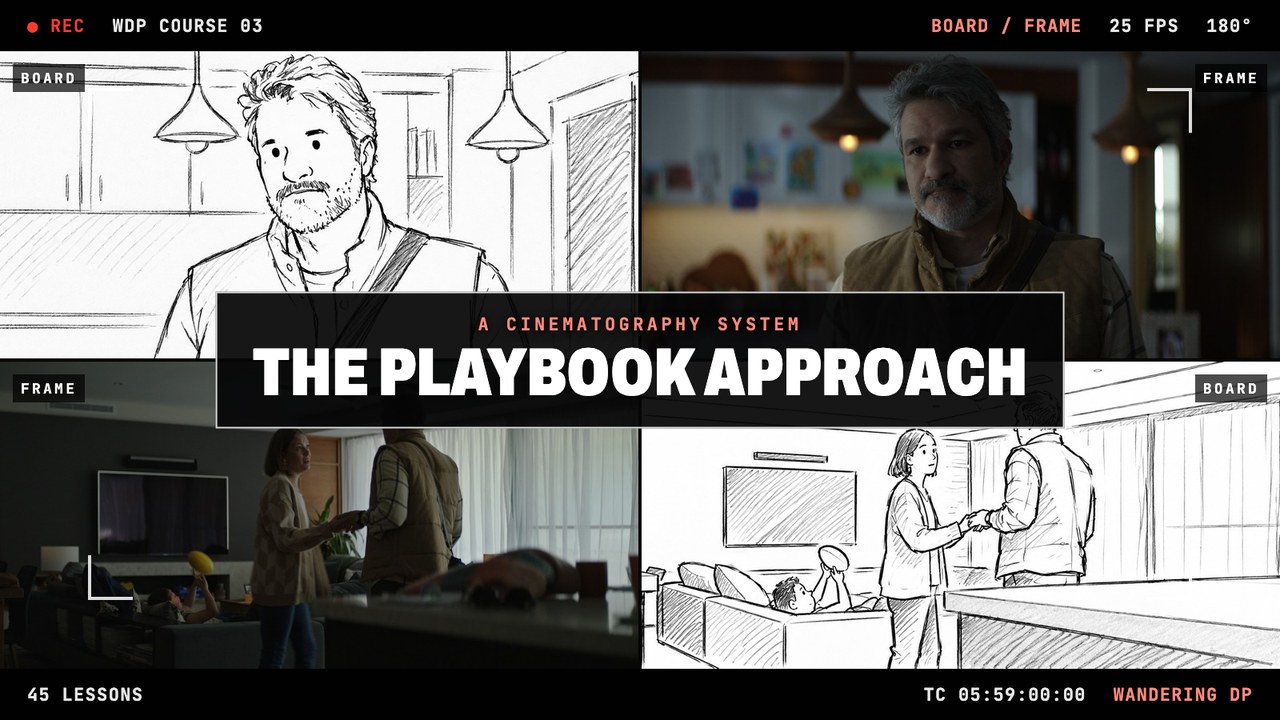
Every DP works from a system.
Most can’t put theirs into words. This course is mine, the one I use every day I’m on a job.
For years I worked to pin down my exact process so I could get consistent results and pass it on. I kept asking the same questions. Which decisions matter most to the final look? Which factors make the biggest difference to a production? How do I work efficiently enough that the crew around me can do their best work?
Over time I noticed patterns. The scenes repeat, and when you know where a scene is headed you can make every decision in prep and on set with that destination in mind. The only other way to build a system like this is your own trial and error on real jobs, and that’s limited by how many jobs you get and how much time you have.
- Why work from a system at all?2.1 Systems introduction · 2.2 Systems, part 1 · 2.4 A cinematography system
- How do I sort the scenes I keep running into?2.6 BODVO · 3.1 B in BODVO · 3.2 The bar scene classic
- How do I lay out my coverage options?4.2 The decision tree · 4.3 Coverage options · 4.7 Inserts & resets
- Where does the camera go first?5.1 The back approach · 6.1 The front approach · 7.1 The third approach
Know the scene, then plan the coverage.
The system sorts the scenes that keep coming up into five: Bar, Office, Dining table, Vehicle and Other. BODVO. This volume sets up the system and works through the B, the bar scene.
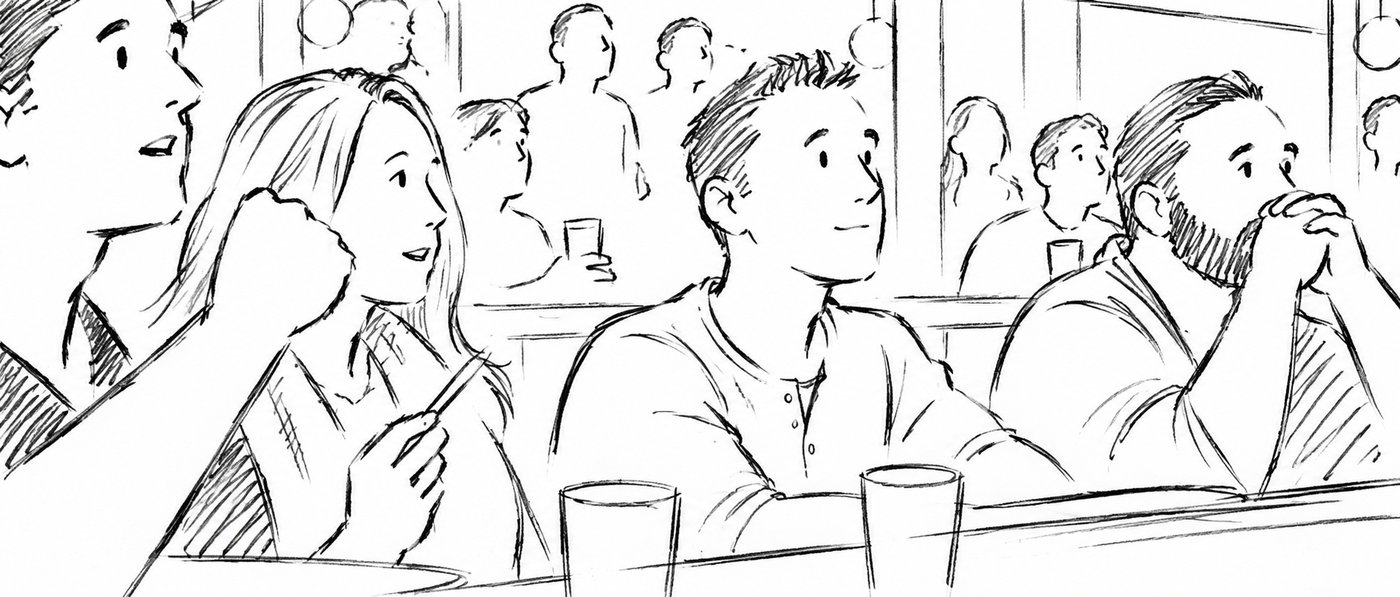
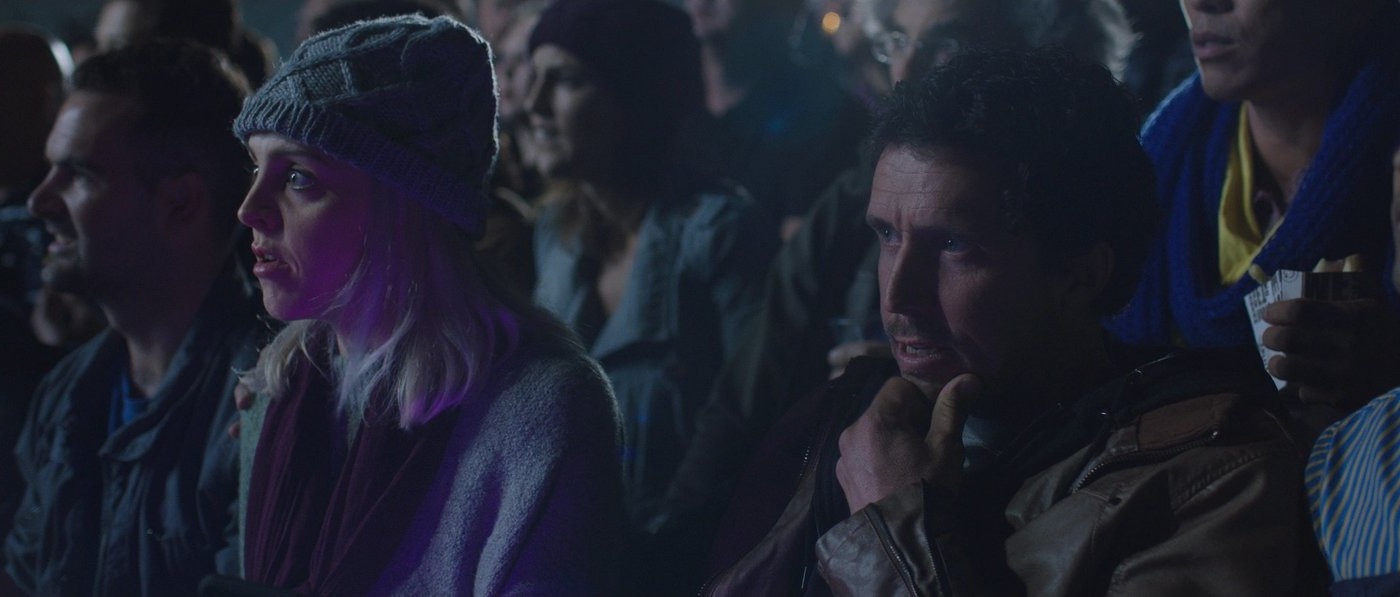
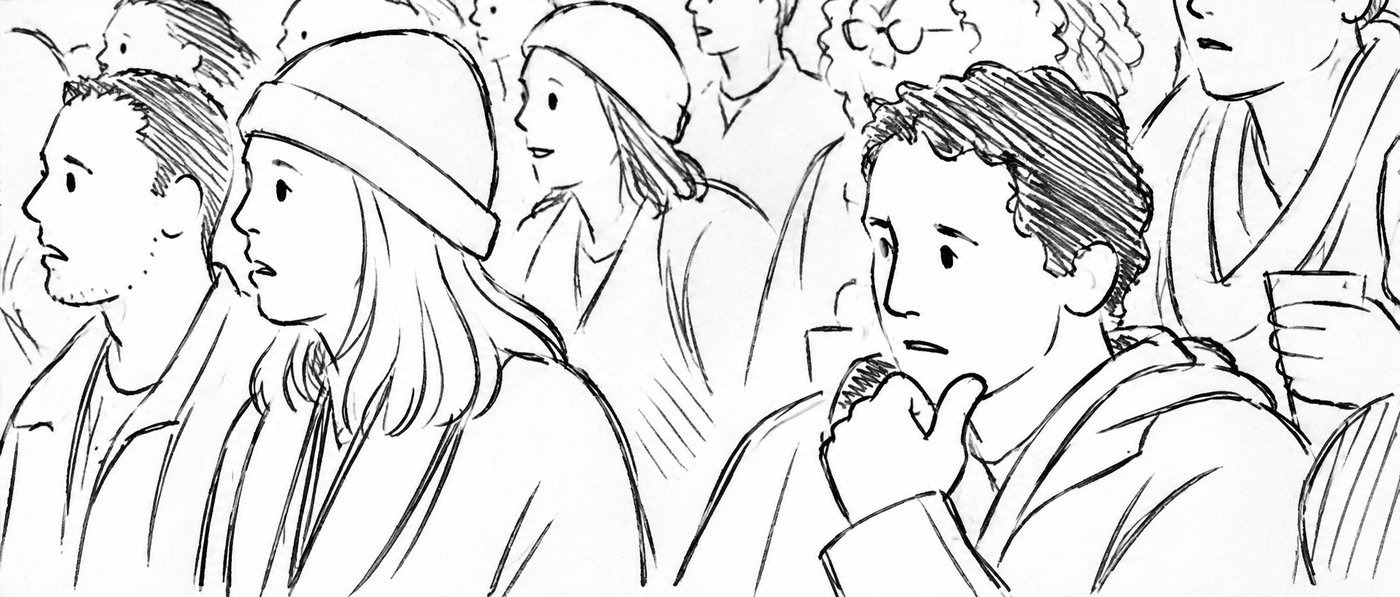
A bar scene is two or more people side by side, all facing the same way, and it turns up far beyond bars. Here’s the same setup twice from a TAB commercial I shot: punters along the bar, then fans in the stands. Each frame sits beside a storyboard drawn from it for this page. In the course I work through these decisions on a virtual set in CineDesigner, so you can see each choice as it’s made.
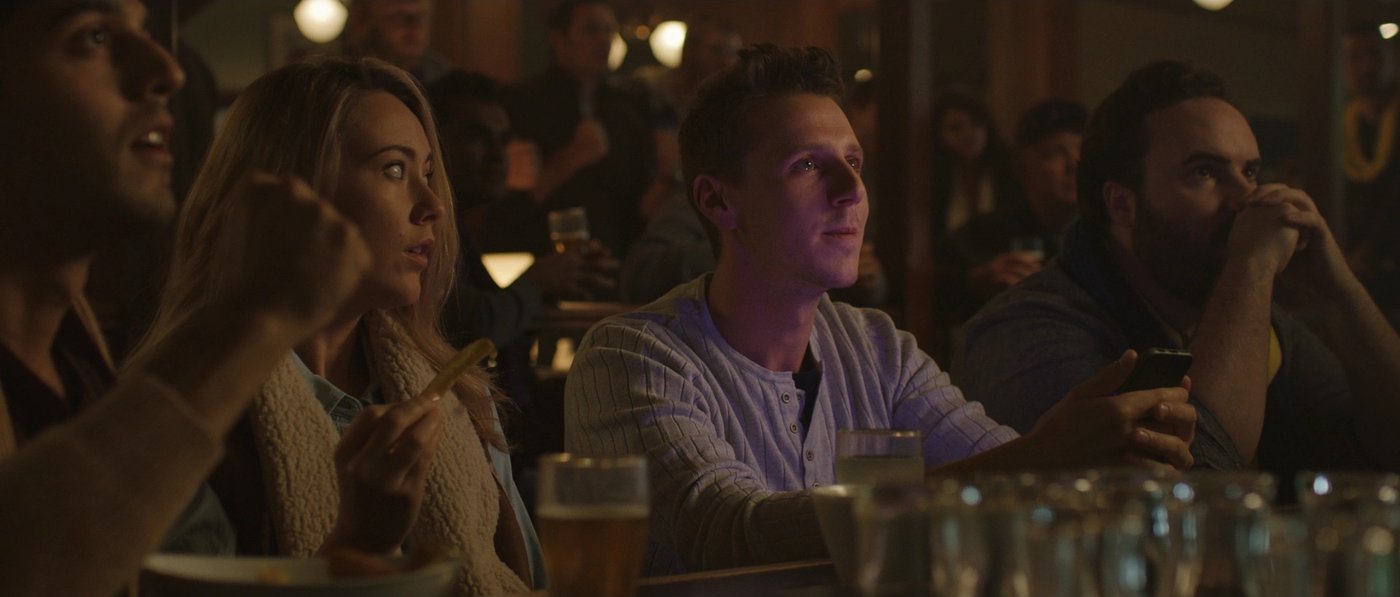
 BOARDFRAME
 BOARDFRAME
DPs who want consistent results.
You don’t need years of experience to use the system, and experienced DPs still get something from seeing a different approach.
Take it if
- You walk into each new scene and work out the coverage from scratch.
- You want a repeatable way to break down a scene, see your options and know which decisions matter most to the final look.
- You want to work efficiently enough that the crew around you can do their best work.
- You’d rather build on a system that’s been tested on real jobs than spend years assembling your own.
Start elsewhere if
- You want to know how commercial jobs are found, booked and prepped. That’s The Foundation.
- You want lighting and exposure technique. That’s Mastering Exposure and the free breakdowns on the podcast.
- You need live, one-to-one coaching. This is a self-paced video course.
Every lesson, in order.
From why a system matters, through the bar scene and the decision tree, to the back, front and reverse approaches worked shot by shot.
Two lessons are free previews on Teachable, so you can see the course before you buy.
01Introduction
- 1.1 Course Intro6:06
- 1.2 Teachable Overview1:30
02Understanding SystemsFREE PREVIEW
- 2.1 Systems Introduction2:48
- 2.2 Systems (Part #1)FREE PREVIEW ↗4:47
- 2.3 Systems (Part #2)5:04
- 2.4 A Cinematography System3:39
- 2.5 The Big 54:26
- 2.6 BODVO5:26
03The B Scene
- 3.1 B In BODVO5:52
- 3.2 The Bar Scene Classic6:15
- 3.3 Alternative Scenes (Part #1)8:06
- 3.4 Alternative Scenes (Part #2)5:38
- 3.5 Exploring the System2:43
04Exploring Fundamentals
- 4.1 The Basics3:49
- 4.2 The Decision Tree9:25
- 4.3 Coverage Options14:24
- 4.4 The Front Wide10:05
- 4.5 The Back Tight8:04
- 4.6 The Front Tight6:18
- 4.7 Inserts & Resets13:43
- 4.8 Keep It Simple7:46
05Option #1
- 5.1 The Back Approach2:30
- 5.2 The Reference10:34
- 5.3 The Master Wide11:24
- 5.4 The Master Wide (Part #2)10:22
- 5.5 The Two Shot14:40
- 5.6 Moving In12:38
- 5.7 Moving In (Part #2)14:41
- 5.8 The Close Up6:51
- 5.9 Insert & Details13:02
06Option #2FREE PREVIEW
- 6.1 The Front Approach3:19
- 6.2 The References8:27
- 6.3 The Front Wide11:23
- 6.4 The Front Wide (Part #2)12:10
- 6.5 The Front Two Shot11:52
- 6.6 The Front TightsFREE PREVIEW ↗11:46
- 6.7 The Front Tights (Part #2)14:55
- 6.8 The Front Tights (Part #3)4:05
- 6.9 The Reverse17:57
- 6.10 The Reverse (Part #2)7:29
- 6.11 Tips4:25
07The Reverse
- 7.1 The Third Approach3:47
- 7.2 Reverse Examples7:42
- 7.3 The Great Reset4:26
08Conclusion
- 8.1 The Wrap Party3:40
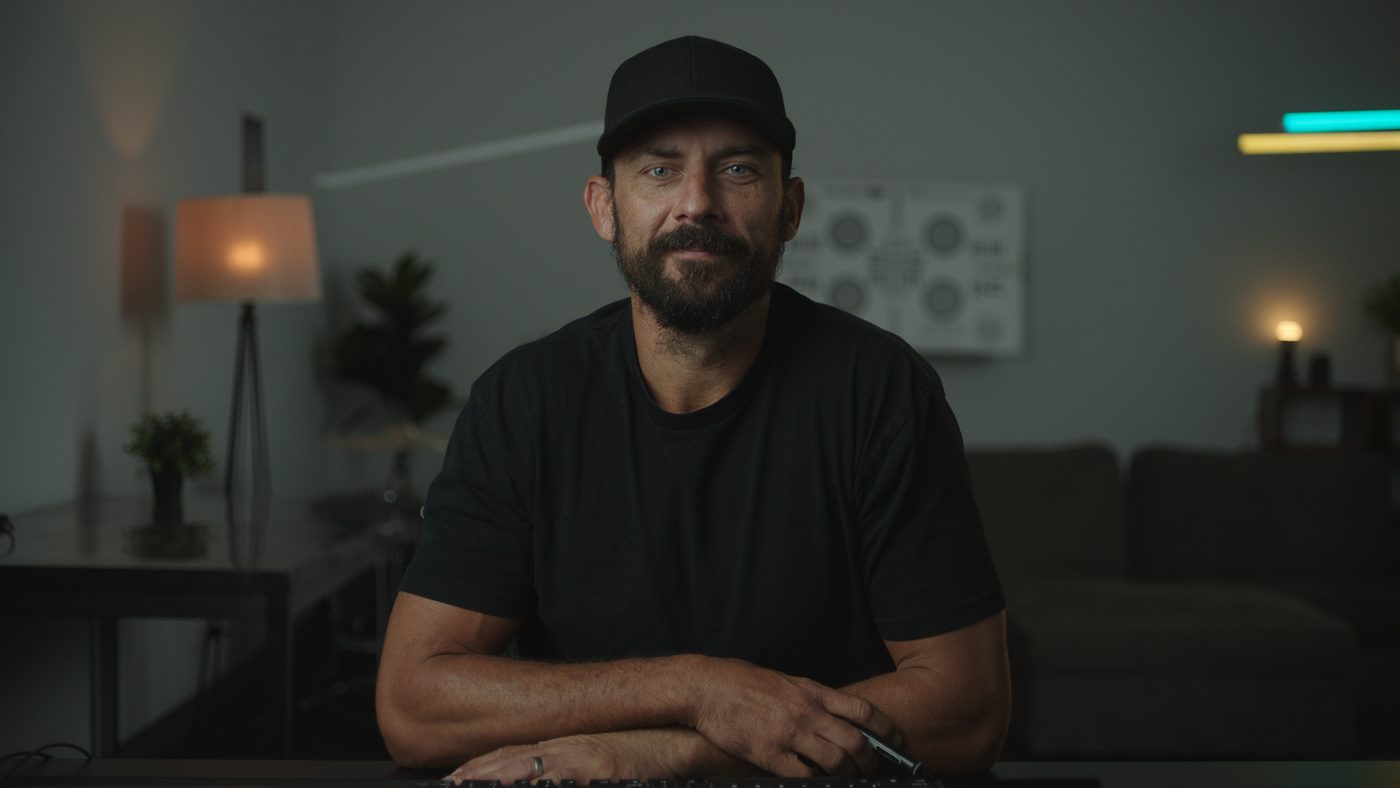
Patrick O’Sullivan, working DP.
I’ve been a cinematographer for more than a decade and have shot hundreds of commercial projects. Landing, prepping and shooting those jobs taught me a lot about the different ways a DP can approach the role.
Since 2014 I’ve shared that on The Wandering DP Podcast, breaking down real jobs with the frames, diagrams and decisions behind them. This course lays out the system behind those decisions, the one I use on every job to read a scene and plan its coverage.
Everything in the Playbook Approach.
One payment, then it’s yours to work through at your own pace and come back to whenever a scene calls for it.
- The course45 video lessons, 5h 59m in total, from why a system matters to watching each decision play out on a virtual set.
- AccessLifetime access on any device, so you can come back to a lesson before the scene that needs it.
- Guarantee30 days. If the course isn’t right for you, let us know within 30 days for a full refund.
30-day money-back guarantee. If it isn’t right for you, email within 30 days of enrolling for a full refund.
Before you enroll.
How is this different from the podcast and Patreon breakdowns?
Which course should I take first?
Do I need years of experience to use the system?
Are there lighting examples in the course?
How long do I have access?
What if the course isn’t right for me?
When does it start and finish?
Can I pay with PayPal?
Where do I watch the lessons?
The bigger your playbook, the better your results.
You can spend years building a playbook for every scene, setup and location on your own. This course walks you through mine. Once you understand how the system is structured, you can build on it to suit your own style.